Saudi Arabia
“I am the Lord! There is nothing too difficult for me.” Genesis 18:14 (CEV)
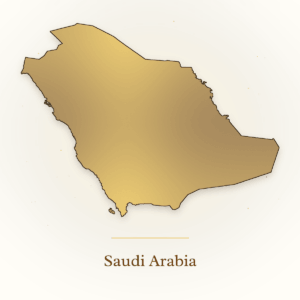
Saudi Arabia is the birthplace of Islam and the custodian of its two holiest sites — Mecca and Medina — which together draw over two million pilgrims annually for the Hajj. The Arabian Peninsula was largely tribal and polytheistic when Muhammad began his prophetic ministry in Mecca around 610 AD; within a century of his death, the Islamic empire stretched from Spain to Central Asia. The modern kingdom was forged in the early 20th century by Ibn Saud through a series of military campaigns, sealed by a theological alliance with the Wahhabi Islamic reform movement that continues to shape Saudi religious life today. The discovery of oil in 1938 made Saudi Arabia extraordinarily wealthy and globally influential. The kingdom funds mosques, madrassas, and Islamic institutions across the world, making its theological export one of the most significant forces in global Islam. Saudi Arabia has no churches, no public Christian worship, and no legal pathway for a Saudi national to follow Christ.1
People live in Saudi Arabia today in the most symbolically closed country on earth for the gospel — the land that gave the world Islam, where the Quran was revealed, where the Prophet is buried, where conversion is apostasy and apostasy carries the death penalty. A significant portion of the population are expatriate workers who include Christians, but Saudi nationals themselves are among the most comprehensively sealed from the gospel of any people on earth. Yet God is sovereign over Mecca and Medina as He is over every place, and there are growing quiet testimonies of Saudis coming to faith — mostly through satellite television, online ministry, and unexplained dreams.2
Recent news: On the 4th of August, 2026, 27 Christians, including children, were deported from Saudi Arabia for praying “un-Islamic prayers.” These Lebanese Believers had gathered together to worship in a private home. Saudi Arabia is not welcoming to any religion other than Islam but is especially intolerant to Christianity. Even though a law was passed in 2006 allowing Christians to gather in worship in private homes, this has not been the reality.3
Unreached people groups: Saudi Arabia has a population of 34,566,000 and of that, 29,552,000 are unreached. The primary unreached people groups are the Saudi-Najdi Arab, Saudi-Hijazi Arab, Bengali-speaking South Asian, Egyptian Generals Arab, Urdu, and Bedouin Arab, among many others. Click here to learn about each.
Pray with us:
God, Saudi Arabia is a country that seems entirely impossible to receive the Gospel message. But for You, all things are possible. In this land of physical Islamic strongholds, let the miracle of a risen Christ be seen. Jesus is not dead, but alive! Jesus is the answer to every pilgrim’s longing and need. Jesus is not bound by Saudi law preventing the Gospel presentation to the seeking millions making the Hajj pilgrimage. It is possible for revival to begin in this most forbidden place! We say, “Come, Lord Jesus. Come to the Saudi-Najdi Arabs, Saudi-Hijazi Arabs, Bengali-speaking South Asians, Egyptian Generals Arabs, Urdu, and Bedouin Arabs in Saudi Arabia!” Amen.
Syria
"’Who are you, Lord?’ Saul asked. ‘I am Jesus, whom you are persecuting.’" Acts 9:5 (NIV)
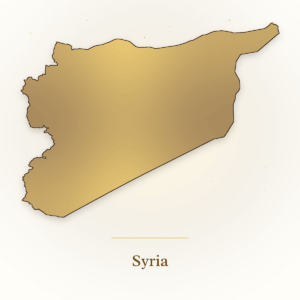
Syria is one of the oldest inhabited lands on earth — Damascus may be the world’s oldest continuously occupied city, and the region has been home to civilization for at least 10,000 years. It was here, in Antioch on the Orontes, that followers of Jesus were first called Christians, and it was on the road to Damascus that the apostle Paul was stopped in his tracks by the risen Lord. The land passed through Assyrian, Persian, Greek, Roman, Byzantine, and Arab rule before becoming a center of the early Islamic Caliphate. The Umayyad Mosque in Damascus — built on the site of a Byzantine church, which itself stood on an earlier temple — is one of the oldest and most significant mosques in the world. After centuries of Ottoman rule, Syria became a French mandate after World War I, then an independent republic in 1946. In 2011, protests against Bashar al-Assad’s government became a catastrophic civil war that killed over 600,000 people, displaced more than half the country’s population, and shattered cities. In late 2024, the Assad regime fell. The ancient Christian communities of Syria — some of the oldest churches in the world — have been decimated by decades of war and emigration.4
People live in Syria today in a nation struggling to emerge from one of the most devastating conflicts of the 21st century — a land where the gospel first took root, where Paul was transformed, where ancient churches still echo with Aramaic, the language Jesus spoke. Syria’s Christian population has shrunk dramatically through war and emigration. The majority Muslim population — Sunni, Alawi, Druze — carries generations of trauma, loss, and religious identity shaped by sectarian conflict. In the chaos of reconstruction and political uncertainty, there is also unprecedented openness: Syrians who have lost everything are asking deep questions about God, meaning, and hope. This ancient land, which gave the world some of its earliest missionaries, may be ripe for a new movement.5
Recent news: Former terrorist, now President, Ahmed al-Sharaa has surprised many as he has begun to govern Syria. While al-Assad ruled with an iron hand, killing over 500,000 Syrian Sunni Muslims, al-Sharaa said he desires to see Syria take its place as a key nation in the Middle East, so many changes are being made. For the time being, changes appear to be (at least in conversation and interviews) positive, but it is too soon to know for sure. Women are not being forced to wear the hijab, and there are no sharia restrictions being imposed on minority groups. “Christians,” he (al-Sharaa) says, are “an essential part of the fabric of Syrian society,” and there will “be no more injustices against the Kurdish people,” and Kurdish forces will serve in the Syrian army.6
Unreached people groups: Syria has a population of 25,620,000 and of that, 24,443,000 are unreached. The primary unreached people groups are the Syrian Arab, Middle-Eastern Turkmen, Alawite, Kurmanji Kurd, Saudi-Najdi Arab, and the Druze, among many others. Click here to learn about each.
Pray with us:
Lord, this is the place where Saul was converted to Paul. We pray for many such conversions – Sauls turned to Pauls in encounters with Jesus through dreams and visions and divine appointments. Could relationships be formed where those who receive these dreams then supernaturally know how to find Christians to disciple them? Make it so, Lord. In this place where Christians have been so persecuted, we ask for a turnaround of justice. Can we dare to believe that Christians could be safe and worship freely in Syria? We also pray for the hundreds of thousands of Syrian refugees that have been scattered throughout the nations. Bring the Gospel to them in the lands they have fled to. Someday, let Syria be a refuge for them to return and share their new faith in Christ with their own countrymen. Thank you, Jesus. We know this is not impossible for You. You are the God of miracles! Amen.
Somalia
"For I am convinced that neither death nor life... nor any powers... will be able to separate us from the love of God." Romans 8:38–39 (NIV)
Somalia occupies the Horn of Africa — the continent’s easternmost point — and has been a maritime crossroads for over three millennia. The ancient land of Punt, mentioned in Egyptian records as a source of incense and gold, is believed to be located along this coast. Arab traders brought Islam to the Somali coast in the early 9th century, and Somali identity and Islamic identity have been intertwined ever since. The Sultanate of Ajuran in the medieval period built hydraulic engineering systems still in use today, while Somali poets and scholars produced a rich oral and literary culture. Italian and British colonial rule in the 19th and 20th centuries divided the Somali people across arbitrary borders — between present-day Somalia, Somaliland, Djibouti, Ethiopia, and Kenya. After independence in 1960, military dictator Siad Barre’s brutal rule ended in 1991 in state collapse, unleashing decades of clan warfare, famine, piracy, and then the al-Shabaab Islamist insurgency. Somalia remains one of the world’s most fragile states, though Mogadishu has seen significant reconstruction since 2012.7
People live in Somalia today in one of the most comprehensively closed countries on earth for the gospel — 90.9% unreached, with Christianity effectively illegal and conversion carrying the threat of death by family, community, or al-Shabaab. The 0.48% who identify as Christian are almost entirely hidden believers or recent converts whose faith is a carefully guarded secret. Al-Shabaab controls large swaths of the countryside and enforces a brutal interpretation of sharia. Yet the Somali diaspora — spread across Kenya, Ethiopia, Europe, North America, and Australia — has produced a growing number of Somali Christians, and their prayers and witness are slowly reaching back into the homeland through technology, visits, and the unstoppable movement of the Spirit.8
Recent news: Somalia “has been ranked the second most dangerous place for Christians to live (besides North Korea), on the Open Doors World Watch List.” Somalia has been fighting the terrorist group al-Shabaab for almost twenty years. This group, and other Islamic extremists have tortured and killed Christians without government intervention or protection. To share the Gospel in Somalia is to risk death, yet Somali evangelists say the church is growing despite persecution, and discipleship is being done creatively through social media.9
Unreached people groups: Somalia has a population of 19,655,000 and of that, 19,224,000 are unreached. The primary unreached people groups are Somali, Rahanweyn, Somali Bantu, Barawani Swahili, Garre, and Southern Oromo, among others. Click here to learn about each.
Pray with us:
God, look on Somalia with compassion. This war-torn, nation, living in fear of al-Shabaab, needs Your intervention. The very tiny numbers of Christians desperately need You to show up for them like You have in the stories they have read in the Word. Their government is not protecting them, the al-Shabaab seek to kill them; they are living like living martyrs. We appeal to You, great God of the Universe, to grant grace for salvation and evangelism in the hardest of circumstances. Embolden the Church that remains to reach the Somali, Rahanweyn, Somali Bantu, Barawani Swahili, Garre, and Southern Oromo, among other, people groups of Somalia. Let every single community and clan be reached, even in the diaspora, in Jesus’ Name. Amen.
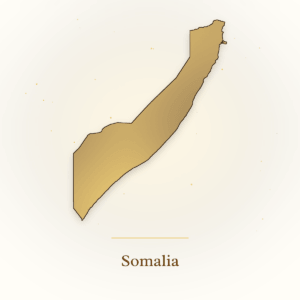
Somaliland
“Can a woman forget her nursing child and have no compassion on the son of her womb? Even these may forget, but I will not forget you. Behold, I have inscribed you on the palms of My hands.” Isaiah 49:15–16 (NASB)
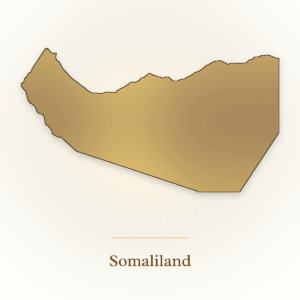
Somaliland occupies the northwestern corner of the Horn of Africa — the former British Somaliland Protectorate — and has functioned as a self-declared independent state since 1991, though no UN member state formally recognizes it. When Siad Barre’s Somali military regime massacred an estimated 50,000 to 200,000 members of the Isaaq clan in the late 1980s and bombed the capital Hargeisa to rubble, the Somali National Movement drove the regime out and declared independence upon its collapse. What followed was remarkable: while the rest of Somalia descended into chaos, Somaliland held elections, built institutions, disarmed militias, and created one of the most stable corners of the Horn of Africa. Hargeisa has been rebuilt; Somaliland has held multiple peaceful elections and transfers of power. The people are ethnically Somali, predominantly of the Isaaq clan, and almost entirely Muslim. The land holds ancient rock art, trading history with Arabia and the Indian Ocean world, and a resilience forged through immense suffering.10
People live in Somaliland today in a nation that does not officially exist — unrecognized, unseen, and almost entirely unreached. The stability that sets Somaliland apart from its southern neighbor has not translated into openness to the gospel; conversion from Islam remains a profound social and cultural rupture, and believers are almost entirely isolated. Yet the same resilience that rebuilt Hargeisa from rubble is present in the small, quiet community of Somali believers who have come to faith — often through diaspora contact, dreams, or digital resources. A people who survived genocide and rebuilt a nation have a capacity for endurance that, transformed by the gospel, could become an extraordinary force for the kingdom.11
Recent news: Somaliland is reaching out to the EU, the US, to Israel, and Taiwan to build support for national recognition, even as it builds infrastructure and economic development to establish itself as a sovereign nation. The burgeoning nation plans for a long journey, but one that determination will eventually see become a reality.12
Unreached people groups: Somaliland has a population of 19,655,000 and of that, 19,224,000 are unreached. The primary unreached people groups are Somali, Rahanweyn, Somali Bantu, Barawani Swahili, Garre, and Southern Oromo, among others. Click here to learn about each.
Pray with us:
Father, this is the brave little country that could! They have many of the components for societal transformation in place, yet, without Christ. We bless them in their endeavors and ask for Your supernatural assistance. Let them shift their mindset on religious freedom, Lord, so that the Gospel can spread freely. Show them that this type of freedom is what makes the governments of the West successful. We pray for the Gospel to be translated in the languages of Somaliland so brave Church members can reach every group with the love of Jesus. Thank you, Lord, Amen.
Sources
- https://lightthenations.org/saudi-arabia
- https://lightthenations.org/saudi-arabia ibid.
- 27 Christians deported from Saudi Arabia for ‘un-Islamic prayer’ | ChristianToday Australia
- https://lightthenations.org/syria
- https://lightthenations.org/syria ibid.
- Enough with the Hand-Wringing: Al-Sharaa Is Better Than Assad | The Washington Institute
- https://lightthenations.org/somalia
- https://lightthenations.org/somalia ibid.
- Growth despite fear: The persecuted Church in Somalia
- https://lightthenations.org/somaliland
- https://lightthenations.org/somaliland ibid.
- President Bihi Addresses Nation on Independence Day – Somaliland NTV
- Country information and unreached people group information from Joshua Project.