Bahrain
"For God speaks in one way, and in two, though man does not perceive it. In a dream, in a vision of the night, when deep sleep falls on men, while they slumber on their beds, he opens the ears of men." Job 33:14–15 (NIV)
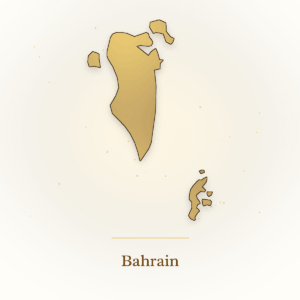
Bahrain is one of the ancient world’s most remarkable small places — an island kingdom in the Persian Gulf whose recorded history stretches back to Dilmun, the paradise-island of Sumerian mythology, mentioned in texts from 3000 BC. For millennia Bahrain was the center of the Indian Ocean pearl trade; before oil, pearls were the country’s defining product and cultural pride. The Portuguese captured it in the 16th century, the Persians held it, and the Al Khalifa dynasty took control in 1783 and rules to this day. Britain exercised protectorate control until independence in 1971. Today Bahrain is a small but wealthy oil economy, a financial hub for the Gulf, and home to the US Navy’s Fifth Fleet. Unlike its Gulf neighbors, Bahrain has relatively greater religious freedom: churches exist here, and a significant portion of the population is Christian — almost entirely migrant workers from South Asia, the Philippines, and Africa.1
People live in Bahrain today in one of the most cosmopolitan small nations in the Gulf. The population of 1.6 million includes a large migrant community, and Christians among them worship in churches that exist openly — a relative rarity in this region. But more than half of Bahrain’s people groups remain unreached, and Bahraini Muslims themselves are largely insulated from genuine gospel witness. The island’s wealth, its ancient culture, and its social fabric are all woven through with Islamic identity. The presence of Christians in Bahrain is a foothold, but the Bahraini people themselves have rarely heard the gospel addressed to them personally.2
Recent news: Bahrain is one of the Middle East countries being targeted by Iran as there are military bases in the nation.3
Unreached people groups: Bahrain has a population of 1,643,000 and of that, 1,434,000 are unreached. The primary unreached people groups in Bahrain are the Bahraini Arabs, The Persians, and Arabs. To see them all, click here.
Pray with us: Lord, we thank you for the freedom of religion that exists in Bahrain. It is a nation with many Christians from all over the world, who are able to go to church on Sunday, and gather through the week in a region where this is largely disallowed. Bless Bahrain for this freedom. And, Lord, let their light shine brightly into the Muslim community there, showing forth the love of Jesus. The Arabic community needs You. Visit the Bahrainis in visions and dreams, as we hear happens frequently among the Arabic populations throughout the Middle East. Let them truly find the Pearl of Great Price. Let this nation be known as precious in Your sight, in Jesus’ Name. Amen.
Comoros
" He has made everything beautiful in its time. Also He has put eternity in their hearts..." Ecclesiastes 3:11a (NKJV)
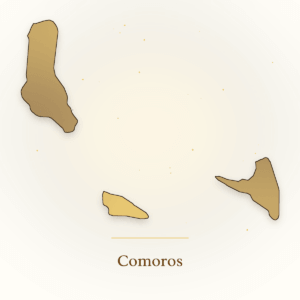
Comoros is a tiny volcanic archipelago in the Indian Ocean off the coast of East Africa, between Madagascar and the Mozambique Channel — three small islands and a host of islets collectively known as the “Perfume Islands” for their production of ylang-ylang, vanilla, and cloves. Arab traders arrived in the 9th century and brought Islam, which has defined Comorian culture ever since. French colonial rule came in the 19th century; independence arrived in 1975, followed by a turbulent period of more than twenty coups and attempted coups in under three decades — one of the world’s most politically unstable records. Today Comoros remains one of the poorest countries in the world despite its astonishing natural beauty. The population is 98% Muslim, and Islamic faith is woven into every dimension of Comorian social life — from the Arabic-inflected Shikomori language to the architecture of every village mosque.4
People live in Comoros today on three lush volcanic islands where the scent of ylang-ylang drifts over fishing villages and the call to prayer marks the rhythm of every day. Comoros is one of the world’s most forgotten and least-reached places — nearly no one prays for it, almost no one goes there, and the infrastructure for gospel outreach barely exists. The small Christian presence (about 1.5%) is mostly associated with the French-speaking community and largely disconnected from the indigenous Comorian population. The Comorian people — African in spirit, Arab in faith, French in formal education — have lived for over a thousand years within the walls of Islam without hearing another voice. They are extraordinarily poor, extraordinarily beautiful in culture, and almost entirely unreached.5
Recent news: Global Tourism is a significant part of life in Comoros. It is an island nation that has been a tourist destination for many years. The nation is now expanding its national parks, and restoring historic buildings, preparing itself for even greater tourism in the future.6
Unreached people groups: Comoros has a population of 883,000 and of that, 843,000 are unreached. The unreached people groups in Comoros are the Ngazidja Comorian, the Ndzwani Comorian, the Mwali Comorian, the Makhuwa-Meetto, and the Deaf. To learn more about these groups, click here.
Pray with us: Lord, this beautiful, lush, fragrant island nation has captured Your heart. The people are poor, and hungry, but we ask You to make them hungry for You. Raise up missionaries to travel to Comoros as tourists to view the beauty of the land and share the Gospel with those who have never heard. Show the people in dreams the missionaries that are coming to tell them about the One True God whose name is Jesus. Let Islam fall off this lovely country and let the people rejoice in their newfound love of the Lamb. We ask these things in Jesus’ Name. Amen.
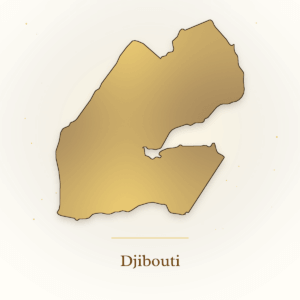
Djibouti
" But how can they call on him to save them unless they believe in him? And how can they believe in him if they have never heard about him? And how can they hear about him unless someone tells them?" Romans 10:14 (NLT)
Djibouti is a tiny country — barely larger than Massachusetts — perched at one of the most strategically critical points on earth: the Bab-el-Mandeb strait, where the Red Sea meets the Gulf of Aden, through which roughly 20% of the world’s shipping passes. The Afar and Somali peoples have lived in this volcanic, desert environment for millennia. France colonized it as French Somaliland in 1884 and held it until independence in 1977. Today Djibouti hosts military bases from the United States, France, China, Japan, Italy, and Saudi Arabia — more foreign military installations per square mile than anywhere else on earth. Its economy runs largely on port fees and payments from these foreign bases. The population is 94% Muslim, drawn primarily from the Somali and Afar ethnic groups — two of the least-reached peoples in the world.7
People live in Djibouti today in extreme heat — it is regularly among the hottest inhabited places on earth — in a tiny country where geopolitical importance masks deep poverty. The Afar and Somali peoples carry centuries of Islamic identity interwoven with tribal culture, and while a small Christian community exists among urban dwellers and expatriates, the indigenous Muslim population has almost no access to the gospel. The many foreign soldiers and workers who pass through Djibouti represent a curious reversal: the nations come to this land, yet its own people remain among the least reached. The country’s volcanic, otherworldly landscape mirrors the spiritual one — dramatic, beautiful, and waiting.8
Recent news: The Catholic Church has launched a recent assembly across Eastern Africa “focused on youth participation, governance, migration, and hope.”9
Unreached people groups: Djibouti has a population of 1,184,000 and of that, 1,117,000 are unreached. The unreached people groups in Djibouti are the Issa Somali, the Afar, the Yemeni Arab, the Omani Arab, and the Deaf. Click here to learn more about these people groups.
Pray with us: Father, Djibouti is a crossroads point for many nations of the world. Our U.S. military has important bases there, along with many other nations’ militaries. Let it be a place where the nations gather to worship You and share the Gospel of the Kingdom with those who are yet without knowledge of You. Let Islam fall by the wayside into the history of their past, as they embrace the love of Jesus. Break open the hard ground of Islamic identity they are known for and exchange it for Truth and Life in Christ in Jesus’ Name. Amen.
Sources
- Bahrain – Light The Nations
- Bahrain – Light The Nations ibid.
- US attacks Iran for 13th night as Trump threatens ‘bigger’ strikes | US-Israel war on Iran News | Al Jazeera
- Comoros – Light The Nations
- Comoros – Light The Nations ibid.
- Breaking and latest news about Comoros | Comoros Breaking News
- Djibouti – Light The Nations
- Djibouti – Light The Nations ibid.
- Djibouti News Today
Country information and unreached people group information from Joshua Project.