Oman
"Let your light shine before others, that they may see your good deeds and glorify your Father in heaven." Matthew 5:16 (NIV)
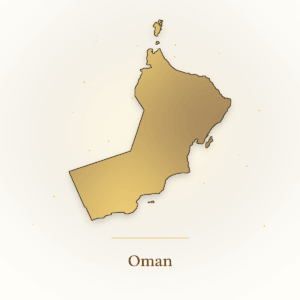
Oman is one of the most ancient and distinctive sultanates of the Arabian Peninsula — a maritime nation whose 19th-century empire extended across Zanzibar, parts of coastal East Africa, and far into the Indian Ocean trade networks. Oman practices Ibadi Islam — a branch older than both Sunni and Shia, considered historically more moderate and tolerant, which has shaped Oman’s famously peaceful diplomacy in a volatile region. Samuel Zwemer, the father of modern Arab missions, made Oman and the Gulf his first mission field in the 1890s, establishing medical clinics, distributing Scripture, and praying for an Omani church he never lived to see. The current Sultan Haitham has continued the tradition of his predecessor Qaboos: carefully neutral in regional conflicts, and more open than most Gulf states to foreign presence — though conversion from Islam remains effectively forbidden for Omanis.1
People live in Oman today in one of the Gulf’s most beautiful and least-evangelized countries — dramatic mountain wadis, ancient forts, a lush frankincense-producing south, and a culture of extraordinary hospitality. Expatriate Christians can worship with relative freedom, but Omanis themselves are almost entirely sealed from the gospel. Ibadi Islam’s theological independence — neither Sunni nor Shia — sometimes makes Omanis more curious and open to spiritual conversation than their Gulf neighbors. The church that Zwemer prayed for a century ago has barely materialized among Omanis; yet his prayers remain, and God is the God who answers prayers across generations.2
Recent news: The U.S. conflict with Iran has significantly involved the Strait of Hormuz. Iran wants to control trade through the Strait together with Oman. Oman has made a couple of proposals to Iran seeking to come to an agreement that can allow for global trade to continue through the Strait that can help to resolve the overall conflict between the U.S. and Iran. The U.S. wants to return to pre-conflict access. Other Gulf states supported Oman’s efforts.
Unreached people groups: Oman has a population of 5,495,000 and of that, 3,910,000 are unreached. The primary unreached people groups are the Omani Arab, Arabic Gulf Spoken Arab, Southern Baloch, Malayali, Bengali-speaking South Asian, and Dhofari Arab, among many others. Click here to learn about each.
Pray with us:
Father, we pray for the work of Samuel Zwemer to be finished in our day. Just like Abraham in the Bible, he had faith to believe You for what he knew he may never see. As difficult as it seems to be to share the Gospel with the Omanis, it is not impossible for You. We pray for Christian tourists, expats, and workers to be intentional in their encounters with Omanis — for brief conversations on hiking trails, in souks, and in homes to become seeds of the gospel. May the Omani Arab, Arabic Gulf Spoken Arab, Southern Baloch, Malayali, Bengali-speaking South Asian, and Dhofari Arab, among many other unreached people groups be reached in Jesus’ Name. Amen.
Pakistan
“Then He said to His disciples, ‘The harvest truly is plentiful, but the laborers are few. Therefore, pray the Lord of the harvest to send out laborers into His harvest.’” Matthew 9:37-38 (NKJV)
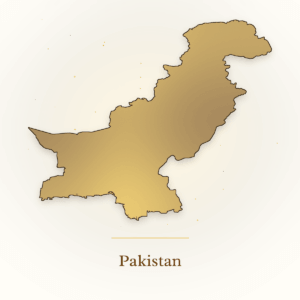
Pakistan came into existence in 1947 as a Muslim homeland carved out of British India at partition — a birth accompanied by one of the largest and most violent mass migrations in history, as millions of Hindus, Muslims, and Sikhs crossed new borders in opposite directions, leaving hundreds of thousands dead. The land itself is ancient: the Indus Valley Civilization flourished here 4,000 years ago; Alexander the Great marched through; Buddhist monasteries once dotted the Gandhara region. Arab traders brought Islam to the Sindh coast in the 7th century, and successive waves of Islamic conquest from Central Asia Islamicized the subcontinent over the following centuries. Today Pakistan is the world’s second-largest Muslim country, with Islamic identity inseparably bound to national identity. A small Christian minority — mostly descendants of lower-caste converts from the colonial era — lives under severe legal pressure, particularly from blasphemy laws that have been weaponized against religious minorities.4
People live in Pakistan today in the country with the largest concentration of unreached people on earth — 255 million people, 99% of whom have never had a genuine encounter with the gospel. The Christian church is tiny, largely marginalized as lower-caste laborers, and faces constant legal vulnerability under blasphemy laws that carry the death penalty. Open witness is dangerous, conversion is a family catastrophe, and the social pressure of Islamic community life is immense. Yet God is at work: Pakistani house churches are multiplying, diaspora believers are returning, and a generation of young Pakistanis is asking questions that Islam has not answered.5
Recent news: In July 2026, the European Parliament denounced the forced conversion and marriage of a 12-year-old Christian Pakistani girl to a 30-year-old Pakistani Muslim man. Courts in Pakistan had supported the man all the way to the Federal Constitutional Court. This is not an uncommon situation in Pakistan, where Christians and Hindus are often persecuted for their faith in this primarily Muslim country.6
Unreached people groups: Pakistan has a population of 255,220,000 and of that, 101,624,000 are unreached. The primary unreached people groups are the Pashtun, Jat (Muslim Traditions), Shaikh, Arain (Muslim Traditions), Rajput (Muslim Traditions), and Sayyid, among many others. Click here to learn about each.
Pray with us:
God, You are the God of the impossible. You have shown Your miraculous works throughout Your Word, in which Your people will delivered out of Egypt, incurable diseases were healed, and many were raised from the dead, most importantly, Jesus! Pakistan is in need of a miraculous move. Do again, what You have done in the past, Lord, and save Your people from persecution. The Pakistani Church is small, but You can use the smallest remnant, filled with love for You, to reach their neighbors. Let there be a movement the Punjabi, Pashtun, Sindhi, and Baloch peoples. Grace them to know You, Lord, in Jesus’ Name, amen.
Qatar
“And what do you benefit if you gain the whole world but lose your own soul? Is anything worth more than your soul?” Matthew 16:26 (NLT)
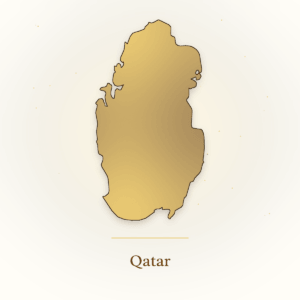
Qatar is a small peninsula jutting into the Persian Gulf that spent most of its history as a quiet backwater of fishing, pearl diving, and Bedouin herding. The discovery of oil in 1940 and then liquefied natural gas in the 1970s transformed it into one of the wealthiest nations per capita on earth virtually overnight. The Al Thani dynasty has ruled Qatar since the mid-19th century, and today the country is one of the Gulf’s most globally engaged players — home to Al Jazeera, host of the 2022 FIFA World Cup, and a sophisticated foreign policy broker between rival regional powers. Qatar’s native Qatari population makes up only around 12% of the total; the rest are migrant workers from South Asia, Southeast Asia, Africa, and the West, drawn by construction, domestic work, and professional employment. This demographic reality means that Qatar — despite being an Islamic state — hosts one of the world’s most religiously diverse populations within its borders.7
People live in Qatar today in a country where extraordinary wealth and global connection exist alongside a native Qatari population almost entirely closed to the gospel. Expatriate Christians — Filipino nurses, Indian engineers, African laborers, Western professionals — make up a significant portion of the population and can worship with some freedom. But Qatari Muslims themselves have almost no access to genuine gospel witness. The 2022 World Cup brought the gospel through believers from 180+ nations; the question is whether those seeds took root. Qatar’s native citizens live in comfort and religious insularity that may be the hardest soil of all: not hostile, just deeply, quietly closed.8
Recent news: “Afghan Christian convert and former government official Ziba Mastoor says she fled to Qatar earlier this month after Taliban intelligence operatives pursued her from Afghanistan into Pakistan, leaving her dependent on a temporary visa and fearful that deportation could place her life in danger.”9 This is an example of the persecution Christians are facing throughout the region, When they try to escape persecution in their home countries, they often have nowhere to go.
Unreached people groups: Qatar has a population of 3,116,000 and of that, 2,251,000 are unreached. The primary unreached people groups are Arabic Gulf-spoken Arab, Palestinian Arab, Persian, Lebanese General Arab, Syrian Arab, and Urdu, among others. Click here to learn about each.
Pray with us:
Lord, reveal Yourself to the unreached in Qatar. They have so much! They are a wealthy nation with so much to offer the world and the region. They are very modern, but most do not have You. Let their unrealized need of You become recognized. Let the many temporary workers in the nation find ways to share the Gospel with those that have no idea they need You. And we pray for an end to religious persecution in Qatar. Let the government protect the rights of the religious minority. Grant Christians who have been imprisoned or treated unjustly for their faith in Pakistan supernatural grace and joy. Let their example be a witness to those around them who will see their love and trust in You. We ask this in Jesus’ Name, amen.
Sources
- https://lightthenations.org/oman
- https://lightthenations.org/oman ibid.
- https://www.youtube.com/watch?v=mUeUkpKhLD0
- https://lightthenations.org/pakistan
- https://lightthenations.org/pakistan ibid.
- https://eclj.org/religious-freedom/eu/le-parlement-europeen-denonce-la-persecution-systematique-des-chretiens-au-pakistan
- https://lightthenations.org/qatar
- https://lightthenations.org/qatar ibid.
- https://www.jpost.com/international/article-903285
Country information and unreached people group information from Joshua Project.