Morocco
"Surely the Lord is in this place, and I was not aware of it." Genesis 28:16 (NIV)
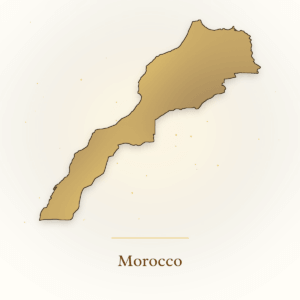
Morocco has one of the most storied civilizations in the Muslim world — a land where Phoenicians traded, Romans ruled, and medieval Islamic dynasties built some of the world’s most extraordinary cities. The Arab conquest brought Islam in the 7th century, and Morocco became the western edge of the Islamic world — “Maghreb” means simply “the West.” Almoravid and Almohad dynasties spread Islam into sub-Saharan Africa and across the sea into Spain. Fez became a center of Islamic learning, and the University of al-Qarawiyyin, founded in 859 AD by a woman named Fatima al-Fihri, is widely recognized as the world’s oldest continuously operating university. France held a protectorate from 1912 to 1956, but Morocco retained its strong national identity under the Alaoui dynasty — the world’s longest-reigning royal family. Today the country is geographically and culturally diverse: Arab, Amazigh (Berber), Saharan, and coastal populations with distinct identities and histories.1
People live in Morocco today in a country of stunning contrasts — ancient medinas and modern cities, Atlas Mountains and Saharan dunes, Amazigh and Arab cultural worlds existing side by side. Morocco is 99% Muslim, and a 1965 law prohibits proselytism of Muslims, making open gospel witness legally risky. Yet Morocco has one of the fastest-growing Christ-movements among Arabic-speaking and Amazigh peoples in all of North Africa — estimated at tens of thousands of Moroccan-background believers, many of whom came to faith through dreams and visions, through satellite television, and through online ministry. The Moroccan church is small but alive, and growing faster than at any point since the Arab conquest.2
Recent news: Tens of thousands of migrants, mostly young people are risking their lives to swim north from Fnideq, Morocco, to the Spanish enclave of Ceuta. It has become an international incident that is complicated for both Moroccan and Spanish leadership. Moroccan youth are driven by social media posts showing success in Europe, where they feel the economics of Morocco leave them with less opportunity for their futures. Some reports say they see Ceuta as a door to finding a way forward to Europe.3 However, other report point toward Morocco’s government weaponizing them against Spain.4
Unreached people groups: Morocco has a population of 38,431,000 and of that, 37,106,000 are unreached. The primary unreached people groups are Moroccan Arab, Southern Shilha Berber, Tamazight Berber, Rif Berber, and Jebala, among many others. Click here to learn about each.
Pray with us:
Lord, we pray for a harvest of souls in Morocco, especially among the young, restless ones, who feel they have no hope for the future. Jesus, You are that hope. You have been meeting the people groups of Morocco in dreams and visions. You are revealing Yourself as the Man in White. Let that revealing be to the Moroccan Arab, Southern Shilha Berber, Tamazight Berber, Rif Berber, and Jebala people, among others. Let those new Beleivers testify of You, the one that sovereignly revealed Himself as Savior and Lord, and lover of their souls. In Jesus’ Name we ask these things. Amen.
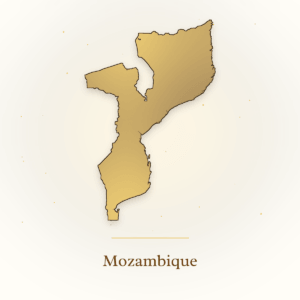
Mozambique
“But Jesus said, ‘Let the little children come to me, and don’t prevent them. For of such is the Kingdom of Heaven.’” Matthew 19:14 (TLB)
Mozambique occupies a long stretch of East Africa’s Indian Ocean coast — a land shaped by Arab traders, Portuguese colonizers, and the devastating East African slave trade. Arab merchants brought Islam to the northern coast centuries before the Portuguese arrived in the 16th century; the Makua, Yao, and other northern peoples became Muslim through these trade networks. Portugal also brought Catholicism, and after independence in 1975, the Marxist FRELIMO government suppressed all religion during a brutal civil war that lasted until 1992. Since the peace agreement, Mozambique has seen an explosion of Christianity — especially vibrant Pentecostal churches in the south. But the predominantly Muslim north remains another country spiritually. Since 2017, Cabo Delgado province has been devastated by an ISIL-affiliated insurgency that has burned villages, beheaded civilians, and displaced over a million people.5
People live in Mozambique today in one of Africa’s most spiritually divided nations — a country where vibrant Pentecostal Christianity fills churches in Maputo while the Makua people of the north, the largest Muslim people group in sub-Saharan Africa, remain almost entirely unreached. The Cabo Delgado insurgency has drawn international attention but also created unexpected spiritual openings: displaced Makua encountering Christians in refugee settings, and the Mozambican church being called to reach its own Muslim neighbors. God has positioned the church in the south for its hardest and most important mission field: the Muslim north.6
Recent news: Roland and Heidi Baker have a work in Mozambique, Iris Global, that reaches the poor and the sick. Out of a deep place of intimacy with the Lord, they bring the love of Jesus to anyone in need. They build schools, dig water wells, medical facilities, and over churches. Since 2017, when the Cabo Delgado Insurgency began in Mozambique, they have helped thousands of refugees, always expressing the love of Christ, and ministering salvation and hope to those that have lost so much. Christians there are being tortured, their homes and livelihoods burned down, and many have lost their lives. Yet, God is moving mightily in that place.7
Unreached people groups: Mozambique has a population of 35,632,000 and of that, 13,972,000 are unreached. The primary unreached people groups are the Makhuwa-Makhuwana, Makhuwa-Meetto, Chopi, Tswa, and Chwabo, among many others. Click here to learn about each.
Pray with us:
Father, our hearts are broken for the great persecution and loss of life in the Cabo Delgado region of Mozambique. So many have lost everything there, and the children are growing up in an environment of terror and fear. Thank you for Iris Global, and other Christian ministries, and the work they are doing there to minister to some of the millions of refugees, and so many children and orphans. You give Mozambique hope through the work there where the love of Jesus is clearly expressed without fear. Provide the basics of life – food, water, household goods, education, and medical care – for all those who come to find refuge. Let the children, especially, see the love of Christ expressed, so they embrace Your love, Jesus, and cling to You all of their days. May they know You and make You known. Amen.
Nigeria
“For our struggle is not against flesh and blood, but against the rulers, against the powers, against the world forces of this darkness, against the spiritual forces of wickedness in the heavenly places.” Ephesians 6:12 (NASB)
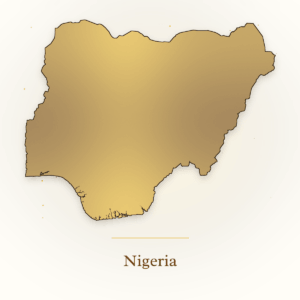
Nigeria is the most populous country in Africa and one of the most religiously significant nations on earth. The south — dominated by Igbo, Yoruba, and other peoples — became heavily Christian through 19th and 20th century mission work and is home to one of Africa’s largest and most dynamic church movements. The north — dominated by Hausa-Fulani people — has been Muslim since the 11th century and includes some of Africa’s oldest Islamic sultanates; the Sokoto Caliphate, established in 1804, was one of the most powerful Islamic empires of the modern era. The Middle Belt between these worlds has been the site of escalating communal violence for decades. Since 2009, Boko Haram and its offshoot ISWAP have waged a jihadist insurgency in the northeast, killing tens of thousands, kidnapping thousands of children, and displacing millions. Yet amid the darkness, Nigeria’s enormous church is being called to its hardest and most important mission field: its own north.8
People live in Nigeria today in a country of staggering scale and spiritual contradiction — 237 million people, a vibrant and growing Christian south, and a Muslim north where the Hausa and Fulani peoples remain among the least-reached in Africa. The Middle Belt bleeds from communal violence. Boko Haram and ISWAP continue to terrorize Nigeria’s northeast. Yet something remarkable is also happening: Muslims who have witnessed the atrocities committed in the name of Islam are asking fundamental questions about their faith, and Nigerian churches are pressing northward with compassion ministries that create credible gospel witness in places that have never had it.9
Recent news: “’Every month, we bury our people,’ Rt. Hon. Stephen Hajara, spokesperson for the Kauru Local Government Legislative Council, told ICC. ‘Last month, we buried 11 people, including children; now, another mass burial of 30. Enough is enough, please! Please come to our aid!’ But little aid actually arrives. The village he was speaking of was ransacked a year earlier as well. The devastation in the north of Nigeria from Fulani militants and Boko Haram, together with ISWAP are leaving the people hopeless and fearful. The church of Nigeria is attempting to provide aid and relief, but the need and the danger in the north is daunting.10
Unreached people groups: Nigeria has a population of 237,528,000 and of that, 75,202,000 are unreached. The primary unreached people groups are Hausa, Nigerian Fulani, Yerwa Kanuri, Ebira, Nupe, and Gbagyi. Click here to learn about each.
Pray with us:
God, thank you for the great move of God across the south of Nigeria. Christianity has spread and mega-churches abound. The government acknowledges You and allows freedom to share the Gospel throughout the country. But the people in the north are crying out for help. Hear, oh Lord. Hear and act! Le the Nigerian Church fast and pray and believe for supernatural action to deliver the oppressed people of the north. Raise up the bold ones who will go form the south to the north and bring the hope of the Gospel message. May the fear of the Lord miraculously reach the oppressors’ hearts. May they repent and turn to Jesus. Let the governments of the earth respond and help Nigeria defeat the insurgents in the north. We ask these things in Jesus’ powerful and faithful Name. Amen.
Sources
- Morocco – Light The Nations
- Morocco – Light The Nations ibid.
- https://www.moroccoworldnews.com/2026/08/332630/diving-into-uncertainty-moroccos-youth-and-the-perilous-swim-to-ceuta/
- Morocco Shows How Migration Has Become Weaponized – Independent Media Institute – The Daily Blog
- Mozambique – Light The Nations
- Mozambique – Light The Nations ibid.
- https://cbn.com/article/bible-says/heidi-bakers-unshakable-faith-mozambique
- Nigeria – Light The Nations
- Nigeria – Light The Nations ibid.
- https://cbn.com/news/world/30-christians-killed-nigeria-latest-attack-every-month-we-bury-our-people
Country information and unreached people group information from Joshua Project.