Lebanon
"For no one can lay any foundation other than the one already laid, which is Jesus Christ." 1 Corinthians 3:11 (NIV)
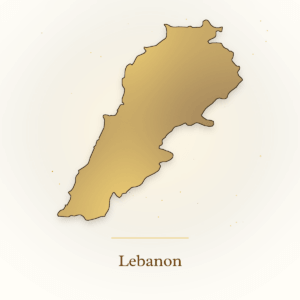
Lebanon is one of the oldest inhabited places on earth — home to the ancient Phoenicians, who gave the world the alphabet. Christianity arrived in the first century; the Apostle Paul preached in Tyre and Sidon. The Maronite church, in communion with Rome, has maintained an unbroken presence here for fifteen centuries. The Arab conquest brought Islam, and over the centuries Lebanon became one of the most religiously diverse societies in the Middle East — Maronite Christians, Greek Orthodox, Shia and Sunni Muslims, and Druze all carved out territory and identity in this small mountain country. The modern Lebanese state, born under French mandate and independent in 1943, was built on a careful confessional balance that collapsed into a devastating fifteen-year civil war in 1975.1
People live in Lebanon today in the middle of one of the worst economic collapses in modern history. Since 2019, the currency has lost over ninety percent of its value, the banking system has frozen savings, electricity runs only a few hours a day, and the middle class has been destroyed. The 2020 Beirut port explosion — one of the largest non-nuclear blasts in history — killed more than two hundred people and devastated the capital. Through all of this, Lebanon’s Christians — still roughly thirty percent of the population — face a historic choice: stay and rebuild, or join the mass emigration that is draining the ancient church from its homeland. Meanwhile, over a million Syrian refugees have swelled the population, creating both enormous need and extraordinary gospel opportunity.2
Recent news: Iran-backed Hezbollah has entrenched itself in Lebanon. It engages in fighting with Israel from southern Lebanon despite the Lebanese government’s prohibition against it. This has left many Lebanese running from the war zones, finding themselves to be homeless, displaced refugees. Some have fled to Beirut, but many Christians have chosen to stay in their homes in the south, trusting the Lord to protect them, but also caring for neighbors and refugees who cannot leave, or can only travel so far.3
Unreached people groups: Lebanon has a population of 5,489,000 and of that, 3,956,000 are unreached. The primary unreached people groups are the Lebanese Muslim Arabs, Syrian Arab, Druze, Palestinian Arab, Alawite, Egyptian General Arab, and Kurmanji Kurd, among many others. Click here to learn about each.
Pray with us:
Father, minister to the people of this war-torn nation. Strengthen the Church, which has existed in Lebanon for two thousand years. In this time if renewed war, let the Believers cast off cultural Christianity and live like the Church of their ancestors – like the Church in the Book of Acts. As they care for their neighbors left behind, and for the multitudes of refugees passing through, let them share their faith with boldness. Let those in crisis have open hearts to receive the Gospel message from these brave and loving Christians as they let their light shine before others, so they may see their good deeds, and glorify You. Where the dark is very dark, let the Light of Christ shine brightly, in Jesus’ Name. Amen.
Libya
“For he himself is our peace, who has made us both one and has broken down in his flesh the dividing wall of hostility.” Ephesians 2:14 (ESV)
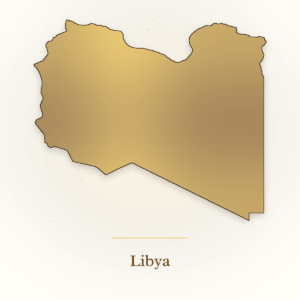
Libya sits at the crossroads of Mediterranean North Africa — a land of extraordinary historical depth. The Phoenicians established trading posts along its coast, and in Roman times, Tripolitania became one of the most prosperous provinces in the empire. Leptis Magna, birthplace of the Emperor Septimius Severus, was the third city of the Roman world and is today one of the best-preserved Roman ruins on earth. The Arab conquest brought Islam in the 7th century, and Libya remained under Arab, Berber, Ottoman, and then Italian colonial rule until independence in 1951. Muammar Gaddafi’s 1969 coup inaugurated 42 years of erratic one-man rule. His overthrow in the 2011 revolution left Libya fractured between rival militias and governments — a conflict that continues today, with rival administrations and armed factions controlling different parts of the country.4
People live in Libya today in a country still without stable governance more than a decade after the revolution — where rival governments lay claim to authority, armed militias control territory, and economic conditions remain precarious despite Libya’s oil wealth. Libya is 97% Muslim, and the Christian population consists almost entirely of Sub-Saharan African and Asian migrant workers. The native Libyan Arab and Berber populations have almost no access to the gospel and virtually no indigenous Christian witness. The chaos of conflict has made formal mission work nearly impossible, yet God has not abandoned this ancient land that once formed part of the early church’s heartland.5
Recent news: Libya is experiencing increasing demonstrations and rioting across the nation as energy cuts have increased. There has been a shortage of both electricity and oil and gas, leaving many without power for up to 12 hours at times. The demonstrators do not seem to be cohesively organized, making many different demands depending on the group and location. The government increased security to prevent political infiltrators from using the demonstrating groups to initiate a coup.6
Unreached people groups: Libya has a population of 7,459,000 and of that, 6,018,000 are unreached. The primary unreached people groups are the Libyan Arab, Cyrenaican Arab, Egyptian General Arab, Sanusi Bedouin, Sudanese Arab, and Arabic-speaking Algerian, among many others. Click here to learn about each.
Pray with us:
Lord, the nation of Libya is a nation with a rich Christian heritage. Remember that the early Church was thriving and sent missionaries to many nations. Today, Libya is in turmoil, looking to the government, and even young radicals, to do something to make their lives better. They need You, Jesus. Be their Peace. Stabilize their government, bring rest to the people, and still the constant disruption to people and infrastructure. Bring Your peace to hearts that fear and long for rest. Reveal Jesus in the turmoil, save the lost, and bring rest to these weary ones in Jesus’ Name. Amen.
Mauritania
“I have other sheep, too, in another fold. I must bring them also, and they will heed my voice; and there will be one flock with one Shepherd.” John 10:16 (TLB)
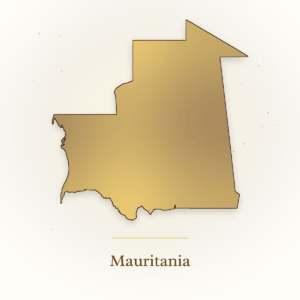
Mauritania is one of the most forgotten nations in the world — a vast Saharan country where the desert swallows everything, including the news. Two-thirds Sahara, one-third Sahel, it was once part of the ancient Ghana Empire before the Arab Almoravid conquest in the 11th century swept Islam across the region and through the trans-Saharan trade routes. Chinguetti, its most celebrated city, was once called the seventh holiest city in Islam — a great crossroads of the camel caravan routes, now half-buried by advancing desert dunes. Mauritanian society is stratified by ethnicity and a history of slavery that the country only officially outlawed in 1981 and criminalized in 2007, though it continues informally. The Arabic-speaking Moorish majority and Black Mauritanian minorities (Haalpulaar, Soninke, Wolof) have long lived in tension. The population is 99.1% Muslim.7
People live in Mauritania today in one of the world’s most comprehensively unreached nations — 88% of people groups are unreached, and the country’s 0.2% Christian population consists overwhelmingly of foreign workers. Mauritania is a deeply Islamic society where conversion is treated as apostasy, punishable by death under law. The ancient Moorish culture, the seminomadic traditions, the trans-Saharan heritage — all of it is woven through with an Islam fourteen centuries deep. Yet God knows the name of every Mauritanian, from the camel herder in the Adrar to the fisherman on the Atlantic coast.8
Recent news: The president of Mauritania, His Excellency Mr. Mohamed Ould Cheikh El Ghazouani, has publicly distanced Mauritania from international conflicts, especially in the Middle East. He said this to try to assure the people of Mauritania that their nation is working to be a stable nation governmentally and economically, even though the have experienced some of the consequences of the global turmoil. He strongly desires to combat corruption in Mauritania, and eliminate jihadism.9
Unreached people groups: Mauritania has a population of 5,315,000 and of that, 5,250,000 are unreached. The primary unreached people groups are the Haratine (Black) Moor, the Beidane (White) Moor, Fuuta Torro, Soninke, and Tamasheq Tuareg, among many others. Click here to learn about each.
Pray with us:
Father, there is a great need for Jesus in this hidden, unreached nation. Islamic tradition that is 14 centuries deep is not an obstacle to You. Nomadic desert life with little contact with the outside world is no challenge to You. You know every hair on every precious soul’s head. You know how to reveal Jesus to them in visions and dreams. You can minister to the most invisible communities of Believers, strengthening them and multiplying them against all odds. You are the Way Maker, Jesus. The country’s new President desires to make his country safe and secure, so answer his desire and introduce him to Jesus so he may lead Mauritania forward into the future in alignment with Your beautiful plan for the nation. In Jesus’ Name, amen.
Sources
- Lebanon – Light The Nations
- Lebanon – Light The Nations ibid.
- Mideast Christians in Lebanon face uncertain future
- Libya – Light The Nations
- Libya – Light The Nations ibid.
- Protests and Roadblocks Spread Across Western Libya Over Power Cuts
- Mauritania – Light The Nations
- Mauritania – Light The Nations ibid.
- President of Republic: “Mauritania Remains a Secure and Stable Nation, Advancing Development and Strengthening National Unity” – Mauritanian News Agency
Country information and unreached people group information from Joshua Project.