Jordan
"For I know the plans I have for you, declares the Lord, plans to prosper you and not to harm you, plans to give you hope and a future." Jeremiah 29:11 (NIV)
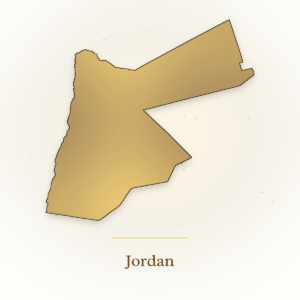
Jordan sits at the geographical heart of Scripture. The ancient kingdoms of Edom, Moab, and Ammon occupied its territory. John baptized Jesus in the Jordan River. Paul traveled its roads. The Nabataean city of Petra was already ancient when Rome absorbed it. Early Christianity thrived here — the ruins of hundreds of Byzantine churches still dot the landscape, and the mosaic map at Madaba is one of the oldest depictions of the Holy Land in existence. The Arab conquest brought Islam in the 7th century. Centuries of Ottoman rule gave way to British mandate, and in 1946 the Hashemite Kingdom of Jordan was born — a monarchy that has navigated one of the most volatile neighborhoods on earth with remarkable tenacity.1
People live in Jordan today in one of the region’s few islands of relative stability — but stability under enormous strain. Jordan hosts more refugees per capita than almost any country on earth: over two million Palestinians and more than a million Syrians, many living in cities and towns rather than camps, competing for housing, work, and dignity. The small Christian minority — about two percent — lives openly and without the severe persecution common in neighboring countries, though conversion from Islam carries serious social consequences. Quietly, a growing evangelical movement is making disciples among both Jordanians and the vast refugee population, finding people whose suffering has made them unusually open to the gospel.2
Recent news: Jordan has embraced the refugee populations of many surrounding nations – Syrians, Iraqis, Lebanese, Yemenis, and Libyans. A number of Christian organizations are assisting these refugees who arrive in this welcoming nation with little but the clothes on their backs. Once in Jordan, these organizations have set up ministries to educate children, counsel those with post-traumatic stress syndrome, and provide vocational training, so lives can be rebuilt. They further bring the Gospel message those who haven’t yet heard, then disciple and train them to go back and spread the Gospel among their people groups, both in Jordan and back in their home countries. Many house churches are being planted throughout the Middle East by those that have been refugees in Jordan.3
Unreached people groups: Jordan has a population of 11,521,000 and of that, 11,144,000 are unreached. The primary unreached people groups are Jordanian Arab, Palestinian Aab, Bedouin Arab, Syrian Arab, and North Iraqi Arab, among others. Click here to learn more about the unreached people groups of Jordan.
Pray with us:
Father, Jordan is being used by You as a country of refuge where the persecuted and war-weary can find rest and hope for a future. As most of the population is under 30 years old, this is a country where hope must spring up, or choices to succumb to cynicism, destructive living, or radicalization could overtake them. We bless the Christian ministries working there. Grant them great favor with the local and national governments, so their work can go on unhindered, and even expand. Protect them from government intrusion. And, God, bless the refugee families. Let all they need to rebuild their lives be given to them, and may they come to know You and make You known from Jordan. In Jesus’ Name, amen.
Kazakhstan
“Even very young men get tired and become weak and strong young men trip and fall. But they who wait upon the Lord will get new strength. They will rise up with wings like eagles. They will run and not get tired. They will walk and not become weak.” Isaiah 40:30-31 (NLV)
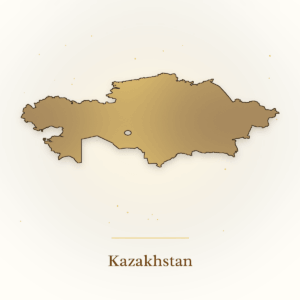
Kazakhstan is the world’s largest landlocked country — a vast sweep of steppe, desert, and mountain that served for millennia as the highway between East and West. The Silk Road passed through it; Genghis Khan conquered it. The Kazakh people were nomadic herders, and their Islam, absorbed in the 15th to 17th centuries, was always lighter and more syncretic than in the Arab world. Russian imperial expansion absorbed Kazakhstan in the 18th and 19th centuries, and Soviet rule proved catastrophic: forced collectivization in the 1930s triggered a famine that killed nearly 40 percent of all Kazakhs. Soviet atheism suppressed both Islam and Christianity for seventy years. When the Soviet Union collapsed in 1991, Kazakhstan emerged as an independent nation with almost no living religious tradition to return to.4
People live in Kazakhstan today in a country still finding itself — post-Soviet, oil-rich yet unequal, officially secular but with Islam reasserting itself as a marker of national identity. Many Kazakhs are Muslim in name only, carrying Soviet-era skepticism toward all religion alongside a new hunger for meaning and roots. In this spiritual vacuum, one of the most remarkable stories in Central Asian mission history has unfolded: thousands of ethnic Kazakhs have come to faith in Christ since 1991, forming indigenous house churches and facing increasing government pressure for doing so. Kazakhstan’s church is young, growing, and costly — and it needs the prayers of the global body.5
Recent news: Kazakhstan has just been noted as having more universities named to the World University Ranking list than all other Asian nations combined. Universities are growing and beginning to attract foreign faculty and students. Some foreign universities are also looking to establish branches in Kazakhstan.6 All of this means a possible increasing well-educated young adult population, drawing students from all over Asia, which can be a great missions opportunity.
Unreached people groups: Kazakhstan has a population of 20,844,000 and of that, 16,367,000 are unreached. The primary unreached people groups are the Kazakh, Northern Uzbek, Uyghur, Tatar, Korean, and Turk, among others. Click here to learn more about the unreached people groups there.
Pray with us:
Lord, we pray for the young people of Kazakhstan. They have primarily known atheism through communism, and Islam. It is time for them to know you. We are glad to hear the Gospel message has begun to reach them as their world is expanding through technology and expansion of their university system. They are being positioned to welcome the youth of Asia to their upgraded universities. May there be an outpouring of the Holy Spirit on the youth and young adults as You are doing in other parts of the world, so those coming encounter Jesus Christ and not the atheistic humanism and cultural Islam of their past. Renew the strength of the young to preach the Gospel of the Kingdom to all that come and share their faith to all parts of Asia in Jesus’ Name. Amen.
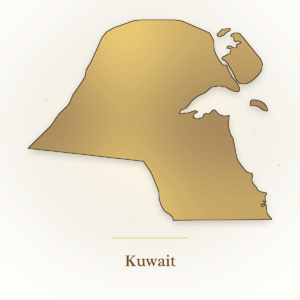
Kuwait
"But Jesus looked at them and said, ‘With people [as far as it depends on them] it is impossible, but with God all things are possible.’" Matthew 19:26 (AMP)
Kuwait is a small emirate at the northwestern tip of the Persian Gulf, shaped by the sea and the desert in equal measure. Bedouin tribes settled the area in the early 1700s, and the Al-Sabah family has ruled ever since. Britain made Kuwait a protectorate in 1899, shielding it from Ottoman pressure; oil was discovered in 1938 and transformed the country beyond recognition. Independence came in 1961. In 1990, Saddam Hussein invaded and annexed Kuwait, triggering the Gulf War and a US-led liberation that restored the Al-Sabah monarchy within months. Today Kuwait is one of the wealthiest nations on earth per capita — and one of the most spiritually closed.7
People live in Kuwait today in a society where nearly seventy percent of the population are foreign workers — South Asians, Filipinos, Egyptians, and others who built the country with their labor and who have almost no legal pathway to citizenship or permanent residence. Many of these workers are Christians, making them the only significant gospel presence in a country where evangelism is illegal and conversion from Islam carries severe social consequences. The Kuwaiti citizen population — Arab, oil-wealthy, and Muslim — has little meaningful contact with the gospel, insulated by wealth, religious conformity, and a legal system designed to keep Islam unchallenged.8
Recent news: On July 28th, Kuwait enacted laws governing the way “houses of worship” are regulated. This legislation establishes “common standards for governance, financial accountability, and regulatory oversight across licensed places of worship, whether mosques, churches, or other recognized religious institutions.” The regulations state that freedom of worship is protected while also mandating security surveillance and monitoring financial activities, among other things. All of this is said to protect those in worship, but also to prevent the exploitation of houses of religious worship from becoming platforms for “sectarian incitement or political mobilization.”9
Unreached people groups: Kuwait has a population of 5,026,000 and of that, 4,142,000 are unreached. The primary unreached people groups are Arabic Gulf Spoken Arab, South Asian, Egyptian General Arab, Bengali-speaking South Asian, Malayali, Saudi-Najdi Arab, among others. Click here to learn more about the unreached people groups there.
Pray with us:
Father, Kuwait is in need of a sweeping move of the Holy Spirit across their nation. While rich in the things of the world, their opportunities to receive a revelation of Jesus Christ seem limited. With the government doubling down on its watchfulness over church activities, and the fact that it is illegal for Muslims to convert, witnessing is a challenge. Let the Christian immigrant workers be bold to share the gospel. Let Kuwaiti students who attend international schools in the west, encounter Christian students more than willing to share their faith in Jesus. We call it “possible” for Kuwaitis to come to Christ! In Jeus’ Name, amen.
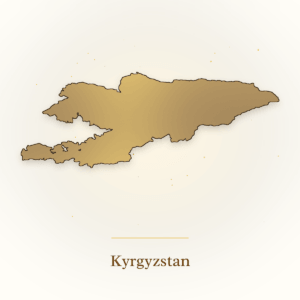
Kyrgyzstan
"And he said unto me, ‘My grace is sufficient for thee: for my power is made perfect through weakness. Very gladly therefore will I rejoice rather in mine infirmities, that the power of Christ may dwell in me.’" 2 Corinthians 12:9 (GNV)
Kyrgyzstan is a small, mountainous nation in the heart of Central Asia — landlocked, rugged, and ancient. The Kyrgyz people were nomadic herders for millennia, moving with their horses and felt yurts across the Tian Shan mountains and the great steppes. Islam arrived gradually between the 15th and 17th centuries, but the nomadic way of life meant it was always absorbed lightly, blended with older shamanistic traditions rather than rooting deeply. Russian imperial expansion in the 19th century was followed by Soviet control in 1924. Collectivization shattered the nomadic economy, and Soviet atheism suppressed all religion for decades. Independence came in 1991, leaving a people searching for identity and meaning with almost no living religious tradition to anchor them.10
People live in Kyrgyzstan today in the most democratically open of the Central Asian states — a country that has seen two peaceful revolutions since independence, and where space for civil society and religious practice is broader than in neighboring Kazakhstan or Uzbekistan, though narrowing. Islam has reasserted itself as a marker of Kyrgyz identity, but for most citizens it remains cultural rather than devout. In this spiritual openness, a remarkable church has taken root: thousands of ethnic Kyrgyz have come to faith since 1991, planting house churches across the country. They face family pressure, occasional violence from religious extremists, and growing government restrictions — but the movement is alive and multiplying.11
Recent news: A college in Kyrgyzstan is developing a model of business education that does not simply educate a student in business, economic, or management theory. They are presenting the students with real problems facing the nation and asking them to use what they are learning to solve the nation’s real-world problems. “Learning takes place through practical cases, business games, and interaction with employers, helping students learn leadership qualities and entrepreneurial thinking.”12
Unreached people groups: Kyrgyzstan has a population of 7,295,000 and of that, 6,684,000 are unreached. The primary unreached people groups are Kyrgyz, Northern Uzbek, Dungan, Uyghur, and Tajik, among others. Click here to learn more about the unreached people groups there.
Pray with us:
Lord, Kyrgyzstan is leading the way in Central Asia as a model in government, religious freedom, and education. However, their society has largely ignored a need of You. Let the brilliance of their minds cause them to seek You out. Let the beauty of the land speak to them of the reality of You. Let those Believers planting house churches receive even more grace to expand them exponentially. Give the Kyrgyz Church wise and mature leaders, scripture in the Kyrgyz language, and a passion to witness from their love of and life in Christ in Jesus’ Name. Amen.
Sources
- Jordan – Light The Nations
- Jordan – Light The Nations
- Jordan – Christian Aid Mission
- Kazakhstan – Light The Nations
- Kazakhstan – Light The Nations ibid.
- Bektenov warned akims of personal responsibility for the repair of energy facilities
- Kuwait – Light The Nations
- Kuwait – Light The Nations ibid.
- Freedom Needs Governance | arabtimes
- Kyrgyzstan – Light The Nations
- Kyrgyzstan – Light The Nations ibid.
- Not Just a Diploma: How ADAM University Prepares Professionals for the New Economy » News of Kyrgyzstan, Bishkek and Osh — latest events today
Country information and unreached people group information from Joshua Project.