Uzbekistan
“Jesus said to him, ‘I am the way, the truth, and the life. No one comes to the Father except through Me.’” John 14:6 (NKJV)
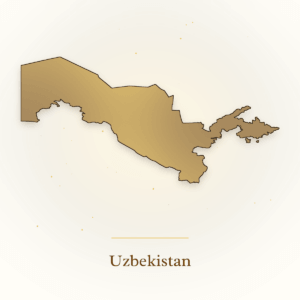
Uzbekistan sits at the heart of ancient Central Asia — a land of staggering historical weight. Samarkand was one of the great cities of the ancient world, a crossroads of the Silk Road where Chinese silk, Persian ideas, Indian mathematics, and Roman coins all passed through. Alexander the Great conquered it and reportedly said it was more beautiful than anything he had imagined. Timur made it the jewel of his vast empire in the 14th century, filling it with architects and craftsmen from across the known world — and the result was some of the greatest Islamic architecture ever built. Christianity came through these roads early: Nestorian Christians traveled the Silk Road deep into Central Asia, planting communities as far as China, long before Islam swept westward and extinguished their witness. Arab conquest brought Islam in the 7th century, and the region became a heartland of Sunni scholarship. Russia absorbed the territory in the 1860s. Soviet rule suppressed all religion for seven decades and enforced collectivization. Independence in 1991 brought authoritarian rule under Islam Karimov, and since 2016 under his successor Shavkat Mirziyoyev — slightly more open, but still tightly controlled.1
People live in Uzbekistan today in Central Asia’s most populous nation — 97% Muslim, with Islam woven into the culture for fourteen centuries. The government tightly regulates religious activity; evangelical Christianity exists in a legal gray zone, and proselytism is criminalized. Yet a small but real church has taken root: estimates suggest tens of thousands of Uzbek believers meeting in homes, navigating a careful dance of faith and legal risk. These are not people who inherited Christianity — they paid a real price to find it. Meanwhile, the vast majority of Uzbeks have never had a genuine encounter with the gospel, and the great Silk Road cities of Samarkand and Bukhara, which once carried so many ideas across the known world, have not yet heard the most important one.2
Recent news: Uzbekistan has a young and tech-savvy population. 60% of Uzbeks are under 30. As a result, the nation is undergoing a quiet, but consistent tech revolution, greatly benefiting the nation. Some of the sectors being impacted are: “fintech, IT and digital services, not to mention sectors like green energy and high-value manufacturing.” The country is welcoming global tech investment and encouraging the rapid development of digital financial services.3
Unreached people groups: Uzbekistan has a population of 37,053,000 and of that, 35,191,000 are unreached. The primary unreached people groups are the Northern Uzbek, Tajik, Kazakh, Karakalpak, Tatar, Kyrgyz, and Tukmen, among many others. Click here to learn about each.
Pray with us:
Lord, Uzbekistan is a nation unknown to many, yet it has made its mark on history in the past and is positioned to do so again in this modern world. You have given them a destiny. Your watchful eye is on them. We pray especially for the young adults who have embraced a digital culture and are helping to mold the global future with their knowledge and expertise. Reveal Jesus to them through the technology they are developing. Let it be the means of evangelism that reaches them. Let them turn from Islam and embrace the one Who has all knowledge and wisdom, but also loves them deeply, and cares for every need. You are the only Way, Jesus. Strengthen the small numbers of Believers meeting in house churches across the nation. Move on the hearts of government leaders to allow greater freedom of religion, so the church can expand more rapidly. Thank you, Lord. Amen.
Western Sahara
"The Lord is not slow in keeping his promise... He is patient with you, not wanting anyone to perish, but everyone to come to repentance." 2 Peter 3:9 (NIV)
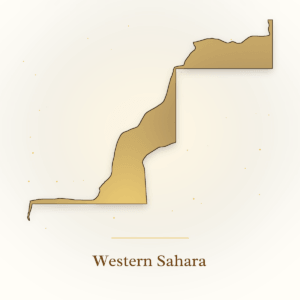
Western Sahara is one of the least known and most contested territories on earth — a vast, mostly empty expanse of Saharan desert stretching along Africa’s northwestern coast, slightly larger than Colorado. The indigenous Sahrawi people are a nomadic Berber-Arab people who have lived across this desert for centuries, known for their hospitality, their tribal structures, and their camel herds. Spain colonized the territory in the late 19th century as Spanish Sahara. When Spain withdrew in 1975, Morocco marched 350,000 civilians into the territory in the Green March and annexed it, triggering a war with the Polisario Front — the Sahrawi independence movement backed by Algeria. A 1991 ceasefire was supposed to be followed by a referendum that never came. Today the territory is divided: Morocco administers the western portion while Polisario controls a thin eastern strip. Over 100,000 Sahrawi refugees have lived in desert camps in Algeria for fifty years, waiting for a political resolution that has not arrived.4
People live in Western Sahara today scattered across one of earth’s most isolated and disputed territories — and in sprawling refugee camps in the Algerian desert, where tens of thousands of Sahrawi have waited in tents and mud-brick shelters for half a century. The Sahrawi are 100% Muslim, and Western Sahara is one of the few places on earth where every single recognized people group is classified as unreached. There are no known indigenous followers of Jesus, no churches, and almost no access for gospel workers. The combination of geographic remoteness, political instability, and Islamic identity has created a territory the gospel has effectively never entered. It is a people that most of the world has never thought to pray for — in a land that barely registers on the global map. But God knows every name.5
Recent news: President Trump made Morocco very happy in August when he acknowledged Morocco’s sovereignty over Western Sahara. Western Sahara is mineral rich, which the United States needs, so the U.S. president is hopeful that the acknowledgement will equate to increased economic and technological cooperation in the territory.6
Unreached people groups: Western Sahara has a population of 601,000 and of that, 579,000 are unreached. The primary unreached people groups are the Sahrawi, Tekna Berber, Regeibat, General Moor, Izarguien Berber, and Imragen, among others. Click here to learn about each.
Pray with us:
Father, Western Sahara is a harsh and empty place, yet people you love are living there. It is, as far as missiologist can tell, 100% unreached. May our hearts break for the lack of anyone there that can share the Gospel with the nomadic people living in that hard place. Every single lost person on earth matters to you, no matter how hard they are to find. They are not forgotten by You. We pray that this new economic move by President Trump and Morocco leads to those who know You coming into Western Sahara to work. A highway will be built there. Let it be a highway of holiness. Let it be a way in the wilderness. Make it a pathway of salvation to the Sahrawi, Tekna Berber, Regeibat, General Moor, Izarguien Berber, and Imragen people of Morocco, in Jesus’ name. Amen.
Yemen
“How then will they call on him in whom they have not believed? And how are they to believe in him of whom they have never heard?” Romans 10:14 (ESV)
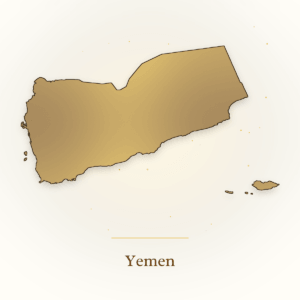
Yemen occupies the southwestern corner of the Arabian Peninsula — a land of dramatic contrasts, from the Hadhramawt valley’s ancient mud-brick tower cities to the high mountain plateaus of Sana’a to the Tihama coastal plain. This is one of the oldest continuously inhabited parts of Arabia, home to the ancient Sabaean kingdom — the civilization of the Queen of Sheba, who traveled to Jerusalem to test Solomon’s wisdom. The ancient South Arabian kingdoms controlled the frankincense and myrrh trade routes, luxuries the entire ancient world desired, making Yemen fabulously wealthy. Islam came to Yemen in 628 AD during the Prophet Muhammad’s own lifetime, making it one of the earliest and most deeply Islamicized lands on earth. The Ottoman Empire, Zaydi Imams, British colonial control in Aden, and eventually two separate republics — North and South Yemen — united in 1990. In 2014, Houthi rebels swept out of the northwest, and the civil war that followed drew in Saudi Arabia, the UAE, Iran, and others, turning Yemen into the world’s worst humanitarian crisis.7
People live in Yemen today in the middle of a catastrophe without end. Over four million people have been displaced, millions face food insecurity and disease, children are dying of preventable illness, and the institutions of a functioning state have largely collapsed. Yet the spiritual situation is equally desperate: Yemen is among the least-reached countries on earth. Fewer than one in five hundred Yemenis is a follower of Jesus — and most of those are foreign workers, not Yemeni Arabs. Islam entered Yemen during the Prophet’s own lifetime, deeply woven into Yemeni tribal identity and family life. The tiny number of Yemeni believers who exist navigate extraordinary danger. This is a land the gospel has almost never reached, in a country the world has largely given up on. God has not.8
Recent news: Iran-backed Houthi rebels operate out of Yemen. They have caused much havoc in Yemen as a result. They have recently been striking Saudi Arabia to retaliate on behalf of Iran for the Saudis support of the U.S. in their recent conflict with Iran. The Houthis are also striking commercial shipping targets in the Red Sea and the Gulf of Aden. This puts Yemen and the Yemeni people at risk of retaliatory attacks in the areas where the Houthis are entrenched.9
Unreached people groups: Yemen has a population of 41,774,000 and of that, 40,633,000 are unreached. The primary unreached people groups are Northern Yemeni Arab, Yemeni Arab, Hadrami Arab, Tihami Arab, Akhdam Muhamasheen, and Somali, among others. Click here to learn about each.
Pray with us:
Lord, we pray for the Yemeni people. In this war-torn, devastated place. Set this people free from the Houthis and the terror they cause. They attract warfare, and the people of Yemen need salvation, for their eternal souls, but also from life in the shadow of the Houthis. Your Word says, “Come unto me, all you who are weary, and I will give you rest.” We pray this for the Yemenis. Turn their hearts toward You. Let them cry out to You. Let Jesus be found by them in their desperation. Where man cannot help them, Lord, provide for them. Send more aid and more aid workers to share the love of Christ with them. Thank you, precious Jesus. Amen.
Sources
- Uzbekistan – Light The Nations
- Uzbekistan – Light The Nations ibid.
- Why Uzbekistan Is The Next Big Investment—and Digital Leads The Way
- Western Sahara – Light The Nations
- Western Sahara – Light The Nations ibid.
- A $1 billion highway, a US.-backed green project and Trump’s letter: How Western Sahara became a new focus of US.-Morocco ties
- Yemen – Light The Nations
- Yemen – Light The Nations ibid,
- Houthis strike Marib again as UN warns Yemen nearing wider conflict
- Country information and unreached people group information from Joshua Project.